


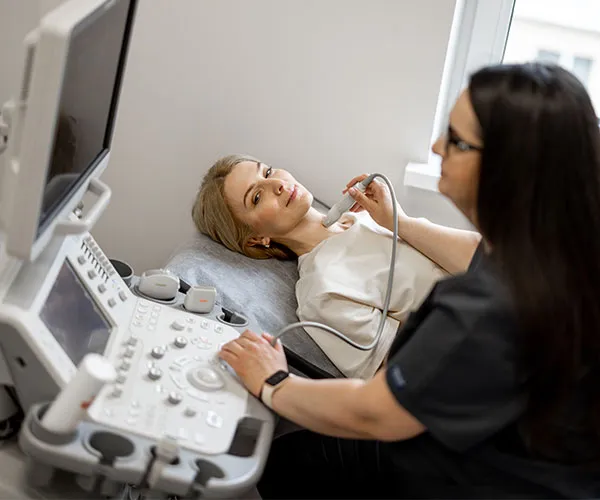
What Is a Thyroid Ultrasound?
A thyroid ultrasound uses high-frequency sound waves to produce detailed, real-time images of the thyroid gland, located at the front of the neck. Because it does not use ionizing radiation, it is a safe and non-invasive way to evaluate the size, shape, and structure of the thyroid.
Healthcare providers commonly recommend a thyroid ultrasound to investigate a thyroid nodule, evaluate an enlarged thyroid gland, or gather additional information after abnormal thyroid blood test results. It is also used to monitor known thyroid conditions over time.
When Is a Thyroid Ultrasound Recommended?
Your healthcare provider may recommend a thyroid ultrasound if you have:
- A thyroid nodule discovered during a physical examination
- An enlarged thyroid gland (goiter)
- Abnormal thyroid blood test results, such as TSH, T3, or T4
- A suspected thyroid cyst
- Neck swelling or a noticeable lump
- A known thyroid condition that requires ongoing monitoring
The type of evaluation performed depends on your symptoms, medical history, and your healthcare provider's clinical concerns.
What Can a Thyroid Ultrasound Reveal?
A thyroid ultrasound provides detailed images that help healthcare providers evaluate the thyroid gland and identify structural changes that may require further assessment.
Depending on the reason for your exam, the ultrasound may help detect:
- Thyroid nodules
- Thyroid cysts
- Enlargement of the thyroid gland (goiter)
- Signs of thyroid inflammation
- Changes in the size or appearance of previously identified nodules
- Other structural abnormalities affecting the thyroid
The results are reviewed alongside your symptoms, medical history, and laboratory findings to determine whether monitoring, additional testing, or further evaluation is appropriate.
Preparing for Your Thyroid Ultrasound
A thyroid ultrasound requires very little preparation.
In most cases:
- No fasting is required.
- You can eat, drink, and take your usual medications unless instructed otherwise.
- Wearing comfortable clothing with an open neckline may make the examination more convenient.
Our team will provide any additional instructions before your appointment and answer any questions you may have.

Why Patients Choose First Medical Center
- Established Community Presence: Proudly serving Cerritos and surrounding communities with accessible diagnostic imaging and preventive health services.
- AAAHC-Accredited Facility: Committed to maintaining high standards for quality, patient safety, and patient-centered care.
- Convenient Access to Imaging: Ultrasound imaging and digital X-rays are available in one location, reducing the need to visit multiple facilities.
- Flexible Scheduling Options: Online scheduling and Saturday appointments help patients access care on their schedule.
- Multilingual Support: Our staff speaks English, Spanish, and Korean, helping patients feel informed and comfortable throughout their visit.
- Expert Image Interpretation: Ultrasound images are interpreted by an experienced teleradiology group, providing diagnostic reporting to support your healthcare provider.
Schedule Your Thyroid Ultrasound in Cerritos
Whether you're following up on abnormal thyroid test results, evaluating a thyroid nodule, or monitoring an existing thyroid condition, First Medical Center provides convenient access to thyroid ultrasound services in Cerritos.
Our team is available to answer your questions, explain the imaging process, and help you schedule your appointment at a time that works for you.
Frequently Asked Questions
A thyroid ultrasound provides detailed images of the thyroid gland and can identify nodules, cysts, enlargement, inflammation, and other structural changes that may require further evaluation.
Most thyroid ultrasounds require no special preparation. You can typically eat, drink, and take your regular medications before your appointment unless your healthcare provider gives you different instructions.
A thyroid ultrasound can evaluate the size, appearance, and characteristics of a thyroid nodule, but it cannot determine whether it is cancerous. If needed, your healthcare provider may recommend additional testing, such as a biopsy.
After your ultrasound is completed, the images are interpreted by an experienced teleradiology group. A detailed report is then sent to your referring healthcare provider, who will discuss the findings and any recommended next steps with you.