


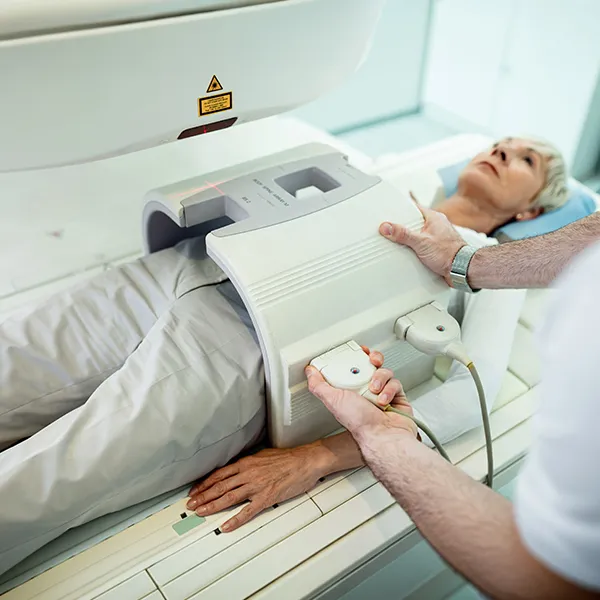
CT scans use advanced X-ray technology and computer processing to create detailed cross-sectional images of the body's internal structures. Depending on the area being examined, these scans allow healthcare providers to evaluate organs, blood vessels, bones, and soft tissues with greater detail than a traditional X-ray.
These imaging studies help healthcare providers investigate symptoms, assess injuries, monitor existing conditions, and guide treatment decisions.
Your healthcare provider may recommend one of these CT scans to evaluate symptoms or conditions such as:
The type of CT scan recommended depends on your symptoms, medical history, and the area requiring evaluation.
Chest, abdominal, and pelvic CT scans provide detailed images that help healthcare providers evaluate a wide variety of conditions.
Depending on the reason for your exam, these studies may help identify:
The results are interpreted alongside your symptoms and medical history to support an accurate diagnosis and determine the most appropriate next steps.
Beyond diagnosing medical conditions affecting the chest, abdomen, and pelvis, CT imaging can also play an important role in preventive care. For eligible adults with a significant smoking history, low-dose CT screening may help detect lung cancer before symptoms develop.
Preparation varies depending on the type of CT scan being performed. Some exams require fasting or the use of contrast material to improve image quality.
Before your appointment, our team will provide instructions specific to your exam. You may be asked to:
Following these instructions helps ensure your imaging study is completed safely and effectively.

Chest, abdominal, and pelvic CT scans can provide important information about a wide range of medical conditions, helping healthcare providers better understand your symptoms and determine the next steps in your care. First Medical Center offers advanced CT imaging in Cerritos, making comprehensive diagnostic services more accessible for patients throughout the surrounding communities.
If your provider has recommended a CT scan, our team is here to help you schedule your appointment and answer any questions before your visit.
Some chest, abdomen, and pelvis CT scans require oral or IV contrast to provide more detailed images. If contrast is needed for your exam, our team will provide instructions before your appointment.
Most abdominal CT scans require fasting for about 4 to 6 hours beforehand. Specific instructions are provided when your appointment is confirmed, so follow them closely.
A CT scan uses X-rays for detailed cross-sectional images, while an ultrasound uses sound waves with no radiation. Your physician chooses the test that fits your situation.
After your scan, the images are interpreted by an experienced teleradiology group, and the completed report is sent to your referring healthcare provider, who will discuss the findings and any recommended next steps with you.